Solitaire Spellbook: Card Game
SpadeThreeCard
4.8302.00 Reviews
- Version
- 0.17.2
- Installs
- 100.00K
- Age Rating
- Everyone
Screenshots
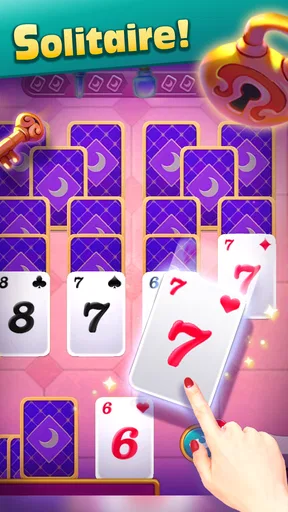
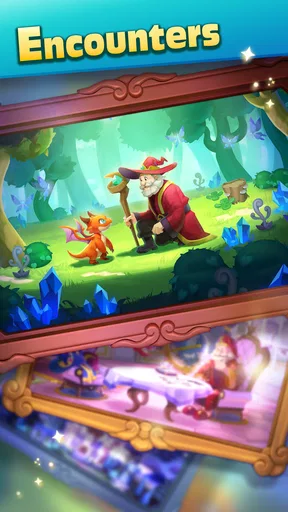

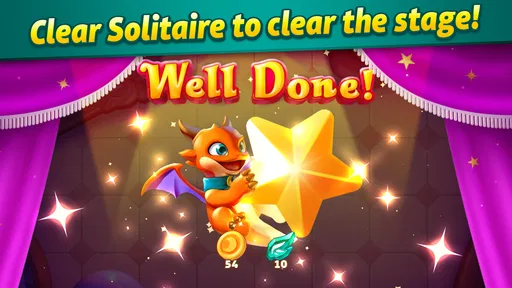
Our Review of Solitaire Spellbook: Card Game
 Analysis by Appyee
I spent time with Solitaire Spellbook: Card Game as a quiet, easy-to-start card game rather than something designed to demand constant attention. That distinction matters. It is free to begin, rated for Everyone, and made by SpadeThree, but its appeal is not simply that it puts a familiar solitaire format on a phone. The more interesting question is whether its presentation and pace make it a better everyday choice than a plain solitaire app.
My short answer is that it works best for players who enjoy classic card-game routines with a little extra identity around them. I could open it for a brief break, make a few moves, and stop without feeling committed to a long session. At the same time, anyone looking for competitive play, deep strategy, or a completely distraction-free version of traditional solitaire may find the experience less suitable.
How Solitaire Spellbook feels in ordinary play
I find the easiest way to judge Solitaire Spellbook is to notice what happens after I make a move: whether the result gives me a useful next choice, a small sense of progress, or a reason to pause. That makes the game’s appeal less about tapping quickly and more about enjoying a tidy chain of decisions. It also helps me tell whether its themed presentation supports the card play or is simply decoration.
A familiar card game with a more distinctive wrapper
The basic attraction is easy to understand: this is a solitaire game for people who already like card games and classic solitaire. That makes the learning curve gentle. I did not need to study a complicated rule set before getting into a round, and the card-table format feels immediately recognizable to anyone who has played solitaire on a computer or with a physical deck.
What gives the game its own character is the “spellbook” framing. I would not approach it expecting a completely new card genre. Instead, I see the theme as a way to make repeated solitaire sessions feel less plain. That is a sensible choice for mobile play, where a familiar activity benefits from a little atmosphere without becoming hard to understand.
The result is particularly comfortable for short sessions. If I have a few spare minutes while waiting for an appointment or winding down before bed, a solitaire round is easier to pick up than a game that requires a team, a long tutorial, or a fixed time commitment. The game’s category also tells you what it is not: this is a card pastime, not an action title that needs quick reactions or sustained concentration.
Speed expectations: quick to enter, measured while playing
My impression is that the experience is built around a calm rhythm rather than spectacle. The important kind of speed here is not rapid animation or frantic input. It is how quickly I can get from opening the game to making a useful move, and how little mental preparation a session requires. Solitaire Spellbook fits that use well because the rules are familiar and each decision is naturally separated from the next.
That measured pace is a strength when I want a low-pressure activity. It also means the game may feel too restrained for someone who wants constant stimulation. A traditional solitaire round asks me to inspect the layout, consider available moves, and accept that some turns are simply about improving the position rather than producing an immediate reward. The spellbook theme adds flavor, but it does not change the fundamental patience solitaire requires.
One practical tip is to treat each round as a small puzzle instead of trying to play as quickly as possible. I found that looking for moves that reveal hidden cards is usually more useful than making the most obvious available move. This is not a special feature claim; it is simply the kind of decision-making that helps a familiar solitaire format feel more thoughtful and prevents the session from becoming a sequence of automatic taps.
What happens during longer or heavier sessions
For short play, the game’s modest design is an advantage. During a longer session, however, the same repeated card-table pattern can expose whether you genuinely enjoy solitaire or were only attracted by the theme. There is no point choosing this game as a substitute for a broad collection of unrelated card modes if your interest fades after a few rounds. Its value comes from refining one central pastime, not from promising a different genre every time you open it.
Heavy use also changes how I judge convenience. In a brief session, restarting after a poor sequence is not a major problem. Over a longer stretch, I become more aware of how much repetition I am comfortable with, whether I want to chase better decisions, and whether the available progression gives me a reason to continue. I would therefore recommend trying it in short bursts first. That quickly reveals whether the spellbook presentation adds enough motivation for your personal playing style.
A useful everyday workflow is to use one round as a deliberate break between tasks. I would not play it while trying to listen to a meeting or handle another demanding activity, because solitaire still benefits from attention. Instead, it works nicely as a contained pause: finish a round, put the phone away, and return to the task without the social or competitive pressure found in many mobile games.
Reliability and the value of a simple format
Solitaire games have one reliability advantage over more elaborate mobile titles: their central activity is easy to understand even when I am tired or distracted. There are fewer layers to remember, and a card layout gives me an immediate visual starting point. That simplicity makes the game approachable for different ages, which matches its Everyone content rating.
I also like that the developer, SpadeThree, has kept the concept focused. A focused card game is easier to judge honestly than an app that tries to combine a dozen unrelated systems. When the game works for me, it is because the card activity is available as a clear, self-contained pastime. When it does not work, the limitation is equally clear: I may simply be in the mood for a different kind of game.
Recovery is especially important in a casual game. If I pause halfway through a round, I want to be able to return without having to rebuild my concentration from scratch. Solitaire naturally supports that kind of interruption better than a live match or a story sequence. Still, I would avoid assuming that every interruption will be equally convenient on every device or in every situation. My practical advice is to finish a move before switching away whenever possible, particularly if the round matters to you.
The game’s current version is 0.16.0, which is worth keeping in mind when setting expectations. I read that version number as a sign to approach the app as an evolving experience rather than a finished, feature-heavy card suite. That is not automatically negative: a smaller game can be pleasant precisely because it avoids clutter. It does mean I would judge it by the quality of the core play and not expect the breadth of a long-established solitaire collection.
Device constraints and resource expectations
The minimum operating-system requirement is Android 7.0, so the game is not limited to only the newest phones. That broad compatibility is useful for people who keep an older handset as a backup or prefer not to upgrade frequently. Even so, compatibility alone does not tell me how every device will behave. Screen size, available storage, background activity, and the general condition of a phone can all affect how comfortable a card game feels.
On a smaller screen, card placement and touch accuracy become more important than raw graphical power. I would pay attention to whether the cards are easy to distinguish and whether taps land where I expect, especially if I use an older phone. On a larger display, the layout should be easier to inspect, but a stretched or poorly balanced interface can still make a simple game feel awkward. These are the kinds of device differences that matter more to solitaire than headline performance.
Resource demands are also best considered in context. A card game built around a static table should generally be a gentler choice than a large three-dimensional game, but I would not turn that expectation into a guaranteed battery or memory claim. If I planned a long session away from a charger, I would test it on my own phone rather than assume every handset will behave the same way. The sensible approach is to close other demanding apps, keep the system updated, and see whether the game fits comfortably into your normal routine.
The free price lowers the barrier to that test. You can try the core experience without paying upfront, while optional in-app purchases range from $0.99 to $99.99 per item. That range deserves attention because “free” does not mean every player will experience the same spending pressure. I would decide in advance whether I am happy to play without purchases, and I would be especially careful before confirming any higher-priced item.
Where it fits beside ordinary solitaire alternatives
Compared with a plain solitaire app, Solitaire Spellbook has a clearer personality. A basic alternative may be preferable if you want the most stripped-back interface possible, with no theme competing for attention. I would choose that kind of app when I am focused purely on card layout, quick access, and minimal decoration.
Compared with a large card-game collection, this title is more focused. A collection is the better choice if you regularly switch between several solitaire variants, free-cell-style games, or other card formats. Solitaire Spellbook makes more sense when you want to settle into one recognizable activity and enjoy a themed presentation around it.
It also differs from competitive card games in a meaningful way. There is no need to coordinate with other players or perform under a timer simply to participate in a session. That makes it friendlier for private downtime, but it also removes the social tension that keeps competitive games exciting. If your main goal is rivalry, rankings, or multiplayer unpredictability, I would look elsewhere rather than expecting this solitaire format to provide it.
Three practical habits that improve the experience
First, I recommend using the game as a reset between demanding tasks instead of letting it become an endless background habit. Solitaire is easy to extend because one more move often feels harmless. Setting a personal stopping point after a round keeps the game relaxing and prevents a short break from quietly taking over the evening.
Second, I would make deliberate use of the undo or recovery tools if they are available in the version you install, but I would not rely on them to remove all strategy. The useful habit is to undo a move when it teaches you something about the layout, not merely whenever the result is inconvenient. That turns mistakes into information and helps distinguish thoughtful play from random experimentation.
Third, I would treat purchases as optional extras rather than part of the definition of success. The game is free to start, and the presence of in-app items means it is worth checking your own spending comfort before playing with children or on a shared device. Since the content rating is Everyone, that small bit of supervision is more practical than assuming the age label answers every question about purchasing behavior.
Who should install it, and who should skip it?
I would recommend it to someone who already enjoys solitaire, wants a themed mobile version, and values a game that can be played alone in short, flexible sessions. It is also a reasonable pick for families looking for an approachable card activity, provided purchases are handled responsibly. The low entry cost makes trying it straightforward, while the familiar rules reduce the need for lengthy explanations.
I would be more cautious about recommending it to players who need constant novelty. If you want a campaign, fast action, competitive matchmaking, or a wide selection of card variants in one package, this is probably not the right first choice. The same applies if you dislike themed presentation and want a completely neutral digital deck. In that case, a simpler solitaire tool may be more satisfying even if it feels less distinctive.
People with older phones can reasonably consider it because Android 7.0 is supported, but I would still test touch comfort and session behavior on the specific device. The game may be technically compatible while the screen is inconvenient or the phone struggles with general multitasking. That is a device-fit issue, not a reason to dismiss the game outright.
My performance verdict after using it
Solitaire Spellbook succeeds when I judge it as a focused, themed solitaire game rather than as a universal card platform. Its strongest qualities are the familiar entry point, the relaxed session structure, and the added identity suggested by the spellbook concept. The free starting price and Everyone rating make it approachable, while the Android 7.0 requirement keeps it relevant to a range of devices.
My reservations are equally straightforward. Solitaire repetition will not become exciting merely because it has a theme, and the in-app purchase range means I would play with spending boundaries in mind. I also would not promise identical speed, battery behavior, or recovery on every phone; those details depend on the device and how heavily you use it. The safest expectation is a modest card game whose main demand is your patience, not your hardware.
With that perspective, I think it is worth trying if you want a personal, low-pressure card break and appreciate a little atmosphere around classic play. I would skip it in favor of a bare-bones alternative when simplicity is more important than personality, or a broader card collection when variety matters more than focus. For the right player, the best reason to choose it is not novelty but a comfortable routine with enough character to make familiar solitaire feel inviting again.
Its 4.9 average from around 3.1 thousand ratings and more than 100 thousand installs suggest that the concept has found an audience, but I would still let your own first few sessions decide. The game is free to try, and that makes the decision easy: install it, play without rushing, notice how it feels on your device, and see whether the spellbook setting gives you a reason to return. For me, it is a pleasant recommendation for calm card-game downtime, with the usual solitaire caveat that the format itself must already be something you enjoy.
Privacy and Permissions
See what permissions an app requests and how it handles your data.
- Wi-Fi connection information
- view Wi-Fi connections
- Other
- view network connections, full network access, control vibration, prevent device from sleeping, Google Play license check
Verdict
Strengths of Solitaire Spellbook: Card Game
- Easy-to-learn solitaire rules with a magical theme.
- Short levels make it convenient for quick gaming sessions.
- Card and spell effects give classic solitaire extra variety.
- Progression rewards encourage regular play.
- Colorful artwork creates a relaxing fantasy atmosphere.
Limitations of Solitaire Spellbook: Card Game
- Some levels may feel repetitive after extended play.
- Certain rewards or features may require patience to unlock.
- Visual effects can occasionally distract from the cards.
- Difficulty balance may vary between individual levels.
- Players seeking competitive multiplayer may find it limited.
Similar Picks in This Category
View All
Solitaire - Classic Card Games
MobilityWare4.6

UNO!™
Mattel163 Limited4.3

Spider Solitaire: Card Games
MobilityWare4.6

Solitaire.com - Classic Cards
Tripledot Studios Limited4.7

Plants vs. Zombies™ Heroes
ELECTRONIC ARTS4.1

Hearthstone
Blizzard Entertainment, Inc.4.1
Frequently Asked Questions
What is Solitaire Spellbook: Card Game?
Solitaire Spellbook: Card Game is a fantasy-themed solitaire experience that combines familiar card-clearing gameplay with magical visuals, collectible elements, and progression-based challenges. Instead of simply completing endless standard deals, you advance through themed stages, unlock new content, and play around a spellbook-inspired presentation. It is designed for casual sessions, although later levels may require more planning and careful use of available moves.
How do you play Solitaire Spellbook: Card Game?
The main gameplay follows the classic solitaire format: you arrange or remove cards according to the rules shown on the screen, uncover hidden cards, and work toward clearing the layout. Each level may introduce a different board, objective, or obstacle, so blindly making the first available move is not always the best strategy. Players should check the tableau carefully, preserve useful cards, and use special abilities at the right moment.
Is Solitaire Spellbook: Card Game free to download and play?
The game can generally be downloaded without an upfront purchase, but free access may include optional in-app purchases, advertisements, or systems that limit some resources and bonuses. These can include extra moves, boosters, lives, coins, or other progression aids. Before downloading, users should review the current store listing and in-game purchase information, especially if children may use the device.
Can Solitaire Spellbook: Card Game be played offline?
Some solitaire levels may remain playable without a constant internet connection, which makes the game suitable for short trips or areas with weak reception. However, features such as advertisements, cloud synchronization, events, account services, updates, and purchases may require online access. Offline availability can also vary by version and device, so it is best to test the game after installation rather than assuming every feature works without the internet.
Is Solitaire Spellbook: Card Game suitable for beginners?
Yes, the game is approachable for players who already enjoy solitaire or want a relaxed introduction to card-based puzzle games. Early levels typically help users understand the rules and available tools, while the fantasy theme gives progression more personality than a basic card app. Nevertheless, some stages may become dependent on luck or require boosters, so players looking for completely traditional, unlimited solitaire should check whether its extra systems match their preferences.
Play our best games!


